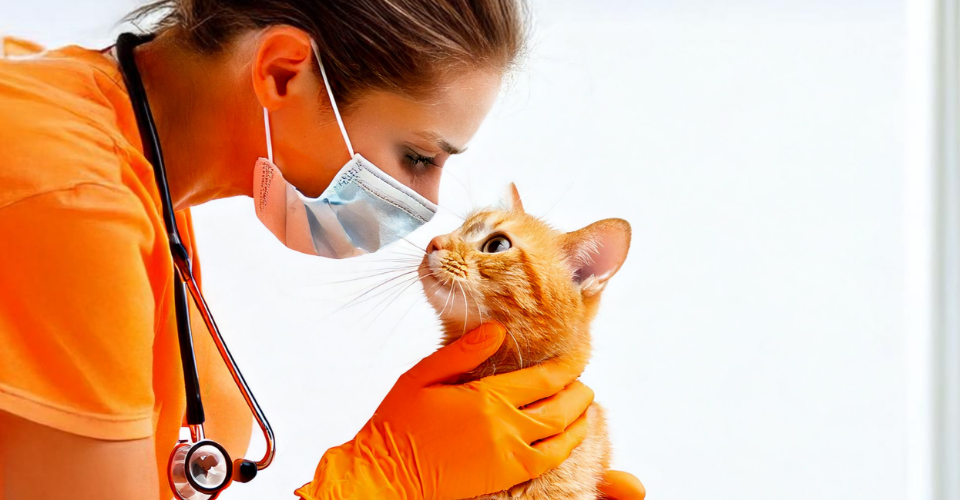
Meet Dr Ashley Heymans
We spoke to Dr Ashley Heymans from Manorswood Veterinary Clinic in Sandton about pet thyroid-related health issues, their signs and symptoms, and ways to manage them.
Tell us a little more about you and what you do.
“I am originally from Zimbabwe, where I grew up on a farm. I knew from about age five that I wanted to be a vet. I moved to South Africa in 2016 and qualified from Onderstepoort in 2021.”
When did you decide to become a vet?
“My career started in rural Limpopo, where I worked with a welfare organisation. It was there that I encountered and took home my two second-hand dogs, Frieda and Ellie. Frieda is a mixed breed that came in as a stray with horrible mange, and Ellie is a border collie that a breeder surrendered due to a large venereal tumour. Both dogs came with me when I moved to Johannesburg at the beginning of 2024 and are healthy and happy “Joburg girls” now. The dogs share their home with two rescue cats, Toast and Pepper.”
Understanding Thyroid Issues in Pets
What are the most common thyroid-related health issues found in pets?
“The thyroid is a gland located in the neck that releases hormones. Thyroid hormones have many purposes but are primarily involved in controlling the metabolism. Dogs and cats can both be affected by problems in their thyroid glands. Most commonly, dogs can develop hypothyroidism (underactive thyroid gland), and cats can develop hyperthyroidism (overactive thyroid gland).”
How do hyperthyroidism and hypothyroidism differ?
“Hyperthyroidism is often seen in cats and rarely diagnosed in dogs. Cats with hyperthyroidism are usually older than 8 years old and their symptoms stem from too much thyroid hormones in the body, causing what is essentially an increased metabolism.
Hypothyroidism is most often diagnosed in middle-aged dogs (2 to 9 years old) and very rarely in cats. Certain breeds, including Boxers, Dachshunds and Dobermans, are more commonly affected, but hypothyroidism can happen to any breed.”
What are the main signs and symptoms?
“Cats with hyperthyroidism may show:
- Weight loss despite a normal or increased appetite
- Hyperactivity
- Increased drinking and urination
- An unkempt coat
Dogs with hypothyroidism may show:
- Lethargy
- Weight gain
- Hair loss over the body and tail
What are the treatment options available?
“We can test thyroid hormone 4 (T4) levels by taking a blood sample from the cat. If the cat has elevated T4 levels, we can begin treatment for hyperthyroidism. There are several options to treat this condition. Most commonly vets recommend an anti-thyroid medication (a tablet given once a day) to reduce the activity of the thyroid. We can alternatively change to an iodine-restricted diet to reduce the thyroid hormone levels (Hills y/d Cat Food is one of these diets). However, only cats can eat this food, which can be difficult for homes with multiple animals. Some cases are suitable for a surgery called a thyroidectomy, where the thyroid gland is removed surgically.
The individual cat, the feasibility of giving medication or changing diet, and the veterinarian’s available options all influence the decision about which method to use to manage the thyroid. Cats with hyperthyroidism risk developing other diseases, such as kidney disease and high blood pressure. So, regular checkups with the vet are strongly recommended to keep your cat healthy and happy.
Diagnosing hypothyroidism is slightly more complicated than diagnosing hyperthyroidism, as we must test the thyroid hormone (T4) and thyroid-stimulating hormone (TSH) levels to check if the brain is trying to tell the thyroid to produce hormones. If there is high TSH and low T4, we can assume that the thyroid gland is underactive and begin treatment for hypothyroidism. We treat an underactive thyroid gland by supplementing thyroid hormones with oral medication. Treatment is lifelong.”
What advice do you give pet parents to ensure early detection and effective management?
“Early detection and starting treatment early in the course of the disease is essential for both hyperthyroidism and hypothyroidism. Your GP vet can most often do a diagnosis of hypothyroidism and hyperthyroidism. If you see signs in your cat or dog that are unusual or suspicious of these conditions, you should visit the vet and describe them. When the veterinarian recommends blood tests, owners are often reluctant to go through with them due to cost constraints. Blood tests are not cheap. However, the peace of mind that doing full diagnostics brings is more than worth the cost of the tests.
Starting your cat or dog on treatment for these conditions vastly improves their quality of life and will give you more time with them. Medical treatment for thyroid conditions is lifelong, and we must stick to the treatment plan provided by the vet to ensure your pet remains healthy. Often, when we have had our cat or dog on medication for a month or two, they start to look better, and we stop their medication, only for them to get worse again. Try to give medications exactly as instructed and collect your pets’ chronic medications in time to prevent them from deteriorating. Giving a tablet daily might be a schlep, but if it improves your pet’s quality of life and extends their lifespan it is worth it!”
Manage Thyroid Issues (and More) with Pet Insurance
Thyroid problems can be tricky to manage, but with early detection, proper care and Pet Insurance from dotsure.co.za, you can help your furry friend lead a healthier, happier life.
Get cover today! We take the bite out of vet bills, putting you and your pet’s well-being first!
Are you looking for more vet advice? Check out our VET ADVICE ON PROPER NUTRITION FOR YOUR PET.